
 English
 Español

Home / News / How Does Supercritical CO₂ Foaming Enhance TPU Foam Properties?
1. Industry Background and Application Importance
1.1 Thermoplastic Polyurethane Foams in Engineered Systems
Thermoplastic polyurethane (TPU) foams have become essential in a range of engineered systems due to their balanced mechanical properties, elasticity, and durability. Unlike traditional flexible foams (e.g., PVC or EVA), TPU foams offer a combination of:
- High tensile and tear strength
- Elastic recovery
- Abrasion resistance
- Chemical stability
- Broad service temperature range
In many modern systems, material requirements often extend beyond basic cushioning or sealing functions to include multi‑functional performance, such as vibration damping, acoustic control, and controlled permeability.
1.2 Role of Perforated TPU Foam Sheet in System Design
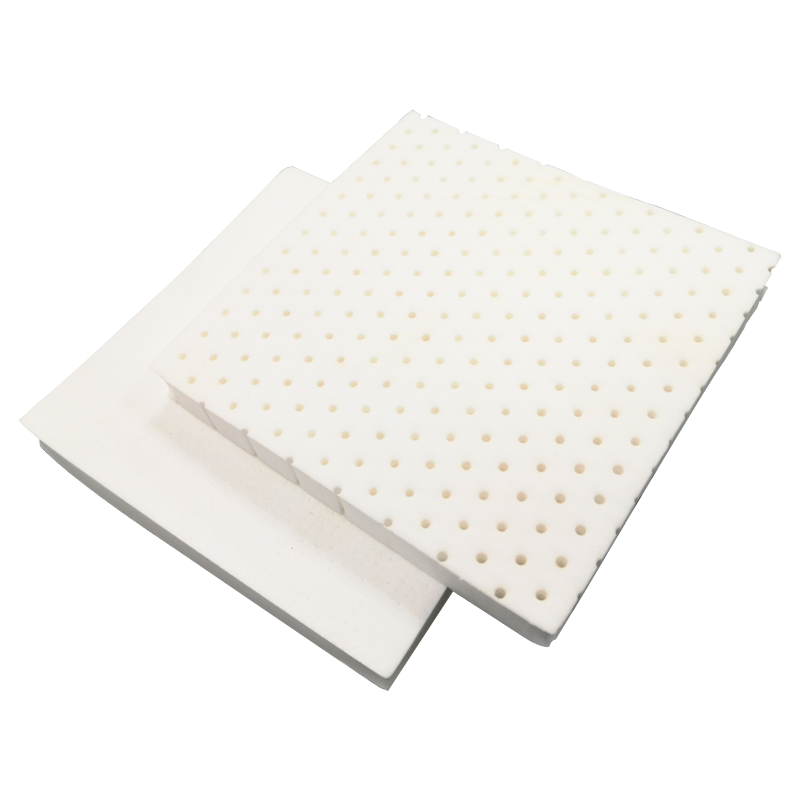
A perforated TPU foam sheet is a form factor where engineered perforations (holes, channels) are incorporated into the foam structure. This transforms the foam from a simple cellular material into a networked component with controlled mechanical and fluidic response.
Key application domains include:
- Automotive — lightweight interior panels, acoustic barrier layers, vibration isolators
- Medical devices — conformal cushioning with fluid pathway control
- Sporting goods & protective equipment — impact mitigation with airflow regulation
- Electronics & enclosures — EMI sealing with controlled ventilation
- Industrial vibration and shock control systems — tuned dynamic responses
Across these domains, systems engineers seek solutions that optimize not just material strength, but also weight, energy absorption, gas/liquid transfer, and integration with adjacent subsystems.
2. Industry Core Technical Challenges
Material designers and systems integrators face several interconnected challenges when specifying TPU foams in advanced systems.
2.1 Inherent Limitations of Conventional Foam Processing
Traditional foaming processes (chemical blowing agents, mechanical frothing) produce cellular structures with limited control over:
- Cell size distribution
- Interconnectivity
- Density uniformity
- Perforation precision
Variability in these parameters can lead to inconsistent mechanical performance, dimensional instability over time, and unpredictable service behavior.
2.2 Balancing Mechanical and Functional Requirements
Systems that require both structural support and regulated permeability create conflicting design constraints. For example:
- Smaller cell sizes may improve mechanical stiffness but reduce gas exchange.
- Larger perforations improve flow but compromise strength.
Achieving a specified set of performance attributes requires control of the foam microstructure at multiple scales.
2.3 Production Scale and Environmental Considerations
From a manufacturing perspective:
- Foaming must be scalable and repeatable.
- Material waste and emissions must be minimized.
- Processing must allow for integration into existing manufacturing lines.
These practical constraints often limit adoption of specialized foaming methods unless they clearly deliver system‑level benefits.
3. Key Technical Pathways and System‑Level Solutions
3.1 Fundamentals of Supercritical CO₂ Foaming
Supercritical CO₂ foaming uses carbon dioxide at conditions above its critical temperature and pressure to:
- Plasticize the TPU matrix
- Penetrate uniformly into polymer chains
- Create nucleation points upon depressurization, generating foam
This process contrasts with conventional gas expansion or chemical blowing agents in that:
- The gas dissolves into the polymer matrix uniformly
- Foaming can be controlled by pressure and temperature profiles
- Cell growth and size distribution are tuned by process parameters rather than additives
This control capability is particularly valuable for engineering perforated TPU foam sheet products with precise morphology.
3.2 Perforation Integration in Supercritical Foaming
In a system‑oriented process design:
- Pre‑perforation or in‑situ perforation patterns are defined according to functional requirements.
- Supercritical CO₂ is introduced under controlled time/temperature conditions.
- Controlled depressurization drives cell nucleation and growth.
This approach allows the creation of:
- Hierarchical structures — macro perforations at defined locations and microcellular structure between perforations
- Gradient density profiles — localized stiffness or compliance zones
3.3 Material and Process Control Variables
Key variables in the supercritical CO₂ process include:
| Variable | System Influence |
|---|---|
| CO₂ Pressure | Influences gas solubility and nucleation density |
| Temperature Profile | Determines polymer mobility and cell growth kinetics |
| Saturation Time | Controls the uniformity of gas distribution |
| Depressurization Rate | Affects cell size distribution and connectivity |
| Perforation Geometry | Dictates directional stiffness and flow characteristics |
System engineers must balance these parameters to meet target performance across mechanical, fluidic, and functional system requirements.
4. Typical Application Scenarios and System Architecture Analysis
To illustrate system‑level implications, we explore several application scenarios.
4.1 Lightweight Vibration Damping in Automotive Interiors
System Challenge: Reduce NVH (noise, vibration, harshness) while minimizing weight.
Traditional Solution: Dense, high‑mass elastomer layers.
Supercritical CO₂ TPU Foam Approach:
-
Low density, high energy absorption zones
-
Perforated TPU foam sheet allows tuned damping across vibration frequency ranges
-
System benefits include:
- Lower part weight
- Predictable vibration attenuation performance
- Integration with mounting structures without secondary bonding
4.2 Acoustic Control in Enclosures and Partitions
System Challenge: Manage sound transmission without increasing bulk.
Approach Using Perforated TPU Foam:
- Macro perforations target low‑frequency absorption paths
- Microcellular foam damps mid/high frequencies
- System architecture combines perforated layers with backing membranes to create acoustic filters
This leads to a multi‑layered acoustic system where each layer contributes a specific frequency response.
4.3 Medical Cushioning with Controlled Moisture Transfer
System Challenge: Provide comfort and pressure distribution while allowing vapor transfer.
Perforated TPU foam sheet structures can be tailored for:
- Controlled gas exchange paths
- Elastic support
- Conformal fit to anatomical contour
System integration into wearable or implantable devices improves patient comfort and device performance.
5. Impact on System Performance, Reliability, and Operations
5.1 Mechanical Performance Benefits
Compared to conventional foamed materials:
- Improved uniformity of mechanical response
- Enhanced elastic recovery and fatigue resistance
- Tunable stiffness gradients within a single component
These benefits translate directly into improved system durability and consistent performance over a product lifecycle.
5.2 Reliability Considerations
Materials produced via supercritical CO₂ foaming typically exhibit:
- Lower residual stresses due to controlled expansion
- Reduced internal defects
- Better reproducibility across production lots
From a system reliability standpoint, these factors reduce failure rates and maintenance events.
5.3 Energy and Operational Efficiency
Key contributors to energy and operational efficiency include:
- Lighter part weight, reducing system energy expenditure (e.g., fuel consumption in vehicles)
- Reduced requirement for secondary machining or assembly
- Avoidance of chemical blowing agents reduces process energy and emissions
5.4 Manufacturing and Supply Chain Impacts
Adopting supercritical CO₂ foaming affects:
- Equipment requirements (pressure vessels, CO₂ handling)
- Process controls (sensors, data logging)
- Supplier qualification criteria
Procurement teams must evaluate vendor capability not just on material specs but also process maturity and control strategies.
6. Industry Development Trends and Future Technical Directions
6.1 Digital Process Control and Smart Manufacturing
Integration of advanced sensors and closed‑loop control allows:
- Real‑time monitoring of gas saturation
- Predictive adjustment of process parameters
- Automated quality assurance
This aligns with broader Industry 4.0 adoption in materials processing.
6.2 Multimaterial Integration
Future systems increasingly demand materials that combine:
- Structural support
- Embedded sensing or actuation
- Multifunctional performance (e.g., EMI shielding + mechanical damping)
Perforated TPU foam sheet technology can serve as a platform for integrating functional elements.
6.3 Sustainability and Circular Economy Considerations
Supercritical CO₂ foaming opens pathways to:
- Minimal chemical residues
- CO₂ reuse in closed‑loop processing
- Materials designed for recyclability
As environmental standards tighten, these capabilities position TPU foams favorably.
7. Summary: System‑Level Value and Engineering Significance
This analysis demonstrates that supercritical CO₂ foaming is not simply a materials processing technique but a system‑enabling technology. By enabling precise control over cellular microstructure and integrating engineered perforations, designers can meet sophisticated performance targets across mechanical, fluidic, acoustic, and thermal domains.
From a systems engineering perspective, the core value drivers include:
- Enhanced performance predictability
- Improved material uniformity
- Tunable multi‑functional behavior
- Alignment with sustainability targets
- Reduced operational and lifecycle costs
For engineers, technical managers, and procurement professionals, understanding these dimensions aids in material selection, specification development, and supplier evaluation in competitive industrial environments.
FAQ
Q1. How does supercritical CO₂ foaming differ from traditional foaming methods?
A1. Supercritical CO₂ foaming uses carbon dioxide in its supercritical phase to uniformly dissolve into the polymer matrix, enabling controlled nucleation and growth of foam cells. Traditional methods rely on chemical blowing agents or mechanical frothing, which offer less control over cell size, distribution, and uniformity.
Q2. What are the principal benefits of a perforated TPU foam sheet in engineered systems?
A2. Perforated TPU foam sheets improve multi‑functional performance by enabling regulated permeability, directional compliance, and tailored vibration or acoustic responses, while maintaining structural elasticity and resilience.
Q3. Are there specific design considerations for perforation patterns?
A3. Yes. Design decisions must account for the target mechanical performance, fluid pathway requirements, and structural constraints. Pattern geometry, spacing, and orientation all influence system behavior.
Q4. How does process control affect final material quality?
A4. Process control influences cell size distribution, density uniformity, and perforation integrity. Tight control of pressure, temperature, and depressurization profiles leads to repeatable and reliable performance outcomes.
Q5. What industries benefit most from these materials?
A5. Automotive, medical devices, electronics, industrial vibration control, and protective equipment are among the major sectors that benefit from structured TPU foams with engineered perforations.
References
- Materials Processing Journal – Supercritical Fluid Foaming Technologies.
- Journal of Cellular Polymers – TPU Foam Morphology and Performance.
- Industrial Applications Review – Foam Structures in System Design.
 ++86-0512-66079229