
 English
 Español

Home / News / Microcellular Foam Technology: A Structural Overview and Material Selection Guide
Understanding Microcellular Foam Technology: A Structural Overview
Microcellular foams occupy a narrow but critical space between solid elastomers and conventional expanded foams. Cell diameters typically fall below 100 microns, which changes how the material behaves under compression, how it insulates, and how consistently it performs across thousands of load cycles. This structural difference is why engineers sourcing cushioning, sealing, or lightweight structural components increasingly specify microcellular grades rather than standard foamed sheet.
Five polymer families dominate current sourcing conversations: perforated TPU, modified TPU (M-TPU), modified TPEE (M-TPEE), modified PEBAX (M-PEBAX), and modified polypropylene (MPP). Each brings a different balance of resilience, thermal tolerance, and weight. The sections below break down what separates them at a material level, then translate that into sourcing guidance for buyers evaluating foam sheet for footwear midsoles, protective packaging, gasket stock, and industrial cushioning.
What ties these five families together is the foaming method rather than the base polymer. Conventional foam expansion relies on chemical blowing agents that produce a broader, less predictable cell size distribution. Microcellular processes instead introduce a supercritical or near-supercritical gas phase into the polymer melt under precise pressure and temperature control, which nucleates a much higher number of smaller, more uniform cells. That uniformity is what ultimately gives buyers a more predictable and repeatable compression response from batch to batch, which matters far more in production sourcing than any single peak performance figure quoted on a datasheet.
Cell Structure Density Control Thermal Behavior Compression Set
Perforated TPU Foam Sheet: Balancing Breathability and Cushioning
Why Perforation Changes Performance
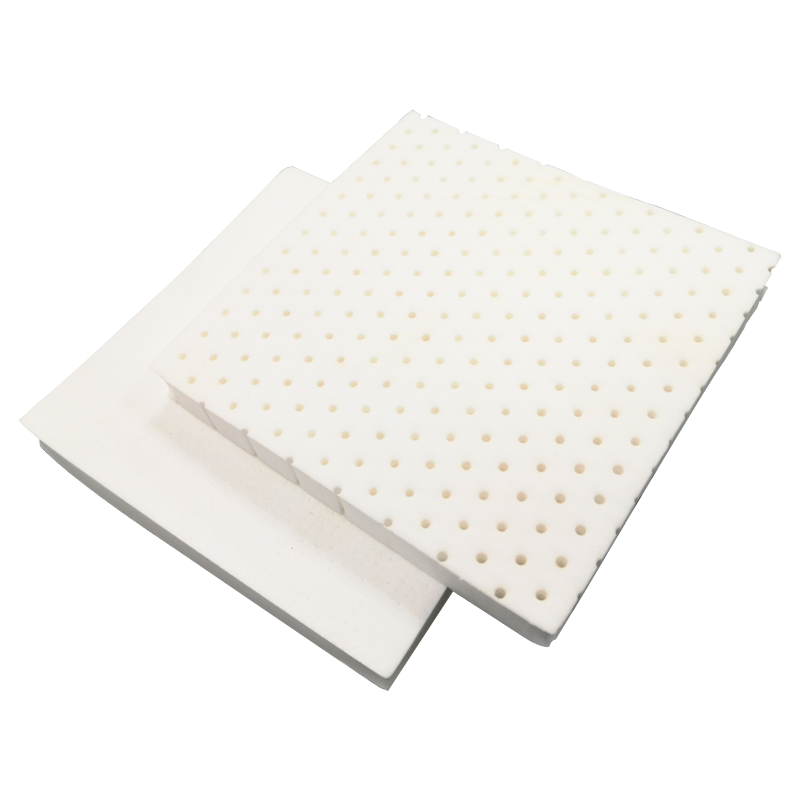
A perforated TPU foam sheet starts from a closed-cell TPU base, then undergoes mechanical or laser perforation to introduce controlled air pathways through the sheet thickness. The result is a material that keeps most of the cushioning behavior of solid TPU foam while adding breathability that closed-cell structures cannot offer on their own.
The perforation method itself is a separate process variable that buyers often overlook when comparing quotes from different converters. Mechanical punching is faster and lower cost, but tends to leave slightly rougher hole edges that can act as tear initiation points under repeated flexing. Laser perforation costs more per sheet but produces cleaner hole boundaries, which matters most when the sheet will later be die-cut into small, geometrically complex shapes for wearable or footwear components.
- Perforation diameter is usually held between 0.5mm and 2mm depending on the airflow target
- Hole density is distributed evenly to avoid localized compression weak points
- Sheet thickness after perforation generally ranges from 2mm to 10mm for cushioning applications
Where This Matters in Practice
Buyers sourcing insole stock, wearable padding, or ventilated protective liners consistently report that perforation reduces heat buildup at the skin or foot interface without meaningfully shortening the fatigue life of the sheet, provided the perforation pattern is engineered rather than applied uniformly regardless of load zones.
A common sourcing mistake is specifying hole density purely for maximum airflow without accounting for the load distribution across the finished part. Zones that carry the highest repeated pressure, such as the heel strike area in a footwear insole, generally perform better with a slightly reduced hole density or a staggered hole pattern that avoids aligning perforations directly beneath the highest-stress contact point. Working with a supplier that can adjust perforation layout per zone, rather than offering only a single fixed pattern, typically produces a more durable finished component.
M-TPU Foam Sheet vs M-TPEE Foam Sheet: Comparing Elastomeric Foam Chemistries
These two material families are frequently confused because both start from thermoplastic elastomer feedstock and both target rebound-focused cushioning. The underlying chemistry, however, drives distinct field behavior, and the difference tends to show up only after a component has gone through repeated real-world use rather than in a single lab test.
Both families process on similar equipment, which is one reason converters sometimes present them as interchangeable. In practice, molecular chain flexibility and how each polymer responds to sustained heat during service life produce measurably different long-term outcomes, particularly in compression set testing carried out over hundreds of loading cycles rather than a handful.
M-TPU Foam Sheet
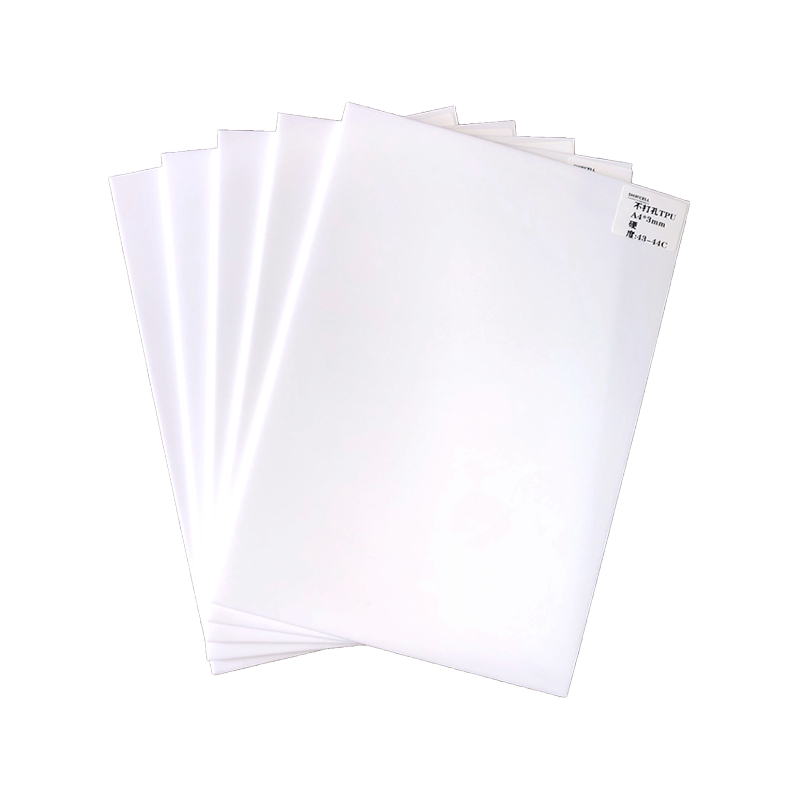
A m-tpu foam sheet is built from polyurethane elastomer modified with a microcellular foaming process, producing high resilience and strong abrasion resistance. Rebound values in this category commonly sit in the 55 to 70 percent range, and compression set after extended cyclic loading tends to stay low relative to conventional PU foam.
M-TPEE Foam Sheet
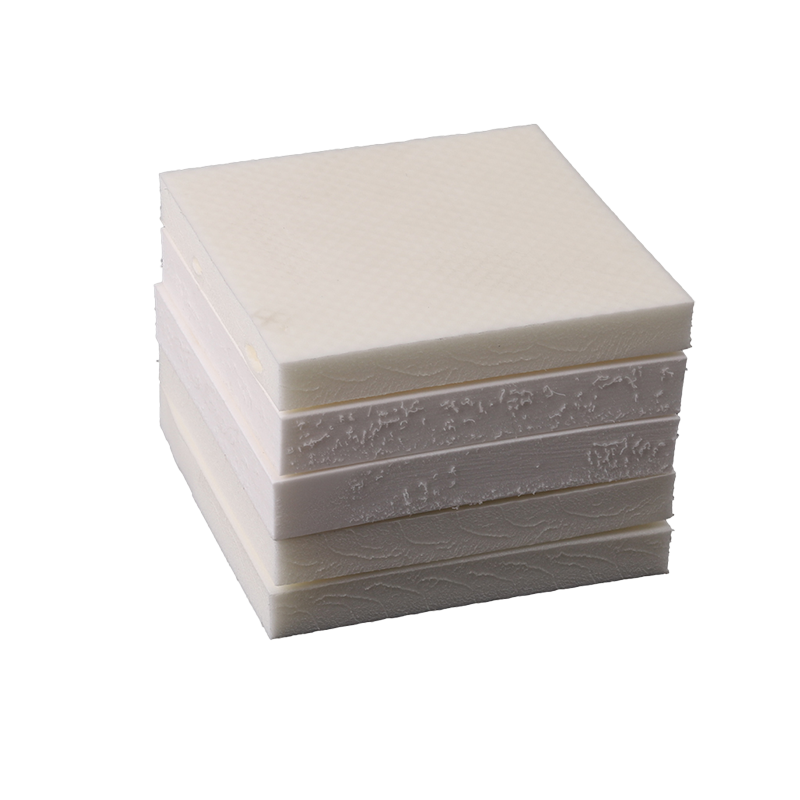
A m-tpee foam sheet uses thermoplastic polyester elastomer as its base. It trades a small amount of abrasion resistance for improved thermal stability at elevated temperatures and a lighter overall density profile, which matters when total part weight is a hard specification.
Selection Logic
Choose M-TPU when abrasion resistance and long-term rebound consistency are the priority, such as repeated-impact cushioning components. Choose M-TPEE when the application involves exposure to warmer service temperatures or when a lower-density sheet is needed without sacrificing recovery speed after compression.
A useful field test when comparing samples from two suppliers is a repeated compression cycle at an elevated temperature close to the intended service environment, rather than at standard room temperature. M-TPEE samples that were nearly identical to M-TPU at room temperature often diverge noticeably once the test temperature climbs, which is exactly the scenario a datasheet comparison alone will not reveal.
M-PEBAX Foam Sheet: Engineering for Energy Return and Thermal Stability
Energy return performance is not a fixed material constant. It shifts with foam density, cell uniformity, and processing temperature, which is why two sheets with identical chemical composition can behave differently on a test bench.
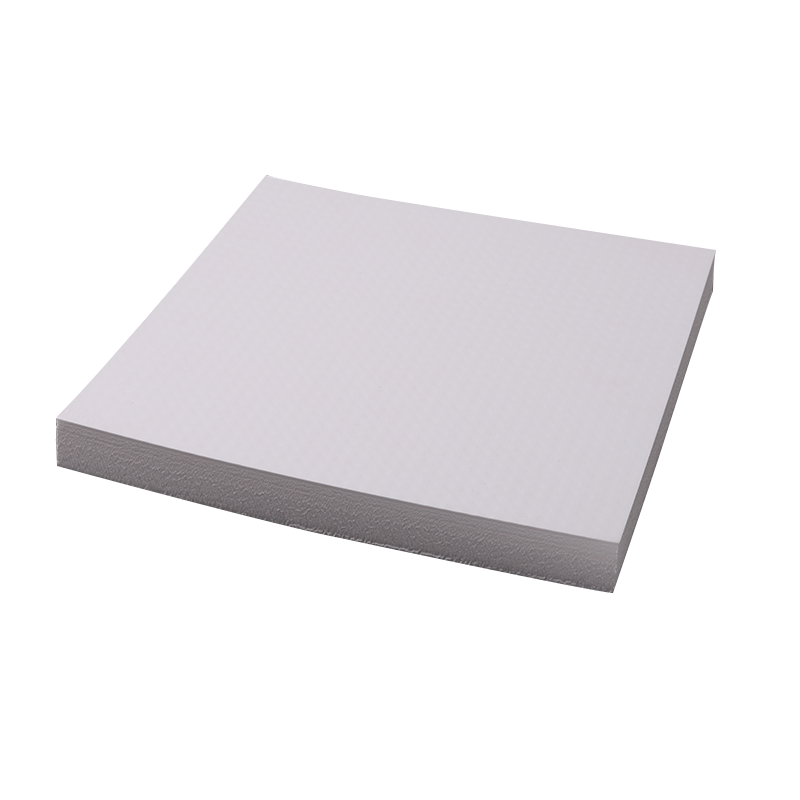
A m-pebax foam sheet is derived from polyether block amide, a polymer family already known in solid form for combining low weight with strong flex fatigue resistance. In foamed microcellular form, this translates into some of the highest energy return figures available among thermoplastic foam sheets, frequently cited in the 65 to 75 percent range under controlled compression testing.
Practical Considerations for Buyers
- Higher raw material cost relative to TPU and TPEE foam grades
- Best justified when energy return and low-temperature flexibility are both required
- Performs reliably across a wide service temperature window without significant stiffening
Because the raw material cost premium is real, it is worth confirming whether the application genuinely needs the top of the energy return range or whether a mid-tier M-TPU grade would meet the requirement at a lower landed cost. In performance footwear midsoles and sports protective equipment, the premium is usually justified. In general industrial cushioning where energy return is a secondary specification, it often is not, and a buyer can achieve acceptable results with a less expensive elastomeric foam.
MPP Foam Sheet: Lightweight Structural Performance
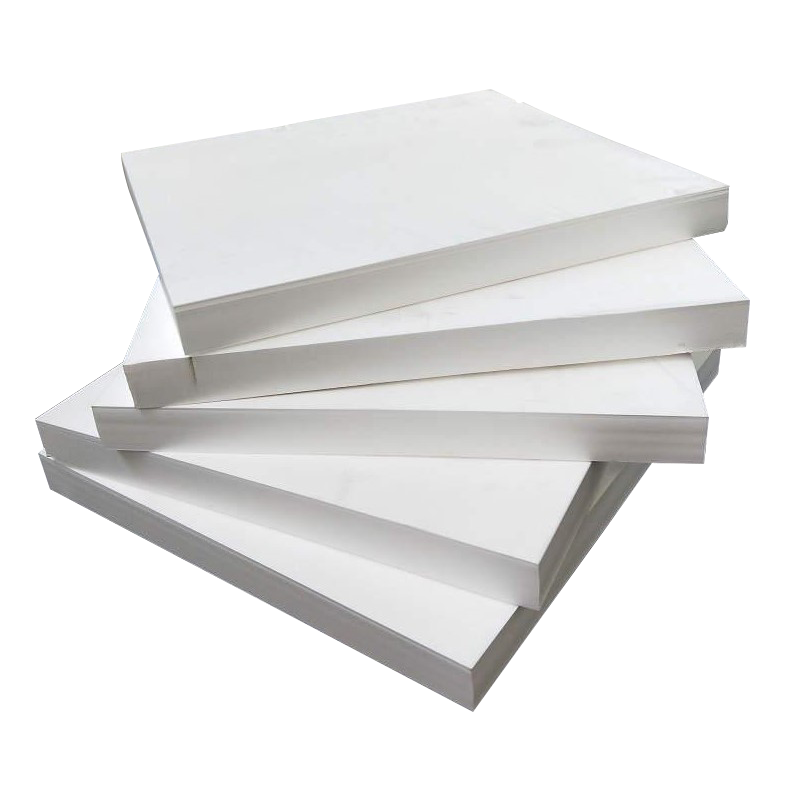
Modified polypropylene foam takes a different design path than the elastomeric foams above. A mpp foam sheet is engineered for a much lower density band, often between 0.03 and 0.09 g/cubic cm, while retaining closed-cell structure that resists moisture uptake.
| Property | Typical Range | Comparative Note |
|---|---|---|
| Density | 0.03 - 0.09 g/cc | Lower than most elastomeric foam sheets |
| Moisture Absorption | Very low | Closed-cell structure limits water uptake |
| Compression Recovery | Moderate | Lower rebound than M-TPU or M-PEBAX |
| Thermal Insulation | Strong | Fine, uniform cell structure limits conduction |
Because of this density and insulation profile, MPP foam sheet is a common choice for lightweight structural cores, protective packaging inserts, and thermal barrier layers where weight reduction outweighs the need for high rebound.
One point buyers frequently miss is that MPP foam sheet can be manufactured in either a fine, tightly uniform cell structure or a coarser cell structure at the same nominal density, and the two will perform differently under impact loading even though a datasheet might list the same density figure for both. When impact protection is part of the specification, requesting a cross-section sample for visual and microscopic inspection before committing to a production run is a low-cost way to confirm cell uniformity rather than relying on density alone.
Microcellular Aliphatic TPU Foam: UV Stability and Yellowing Resistance
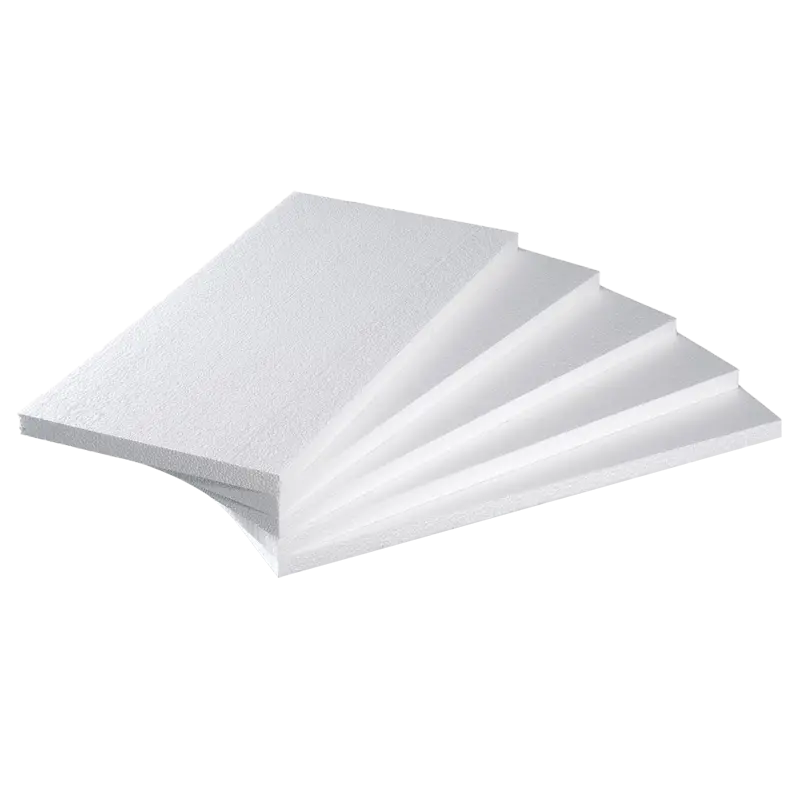
Standard aromatic TPU foam yellows with sustained UV exposure, which limits its use in visible, light-exposed applications. Microcellular aliphatic TPU foam replaces the aromatic backbone with an aliphatic structure, substantially slowing discoloration while keeping the resilience and rebound characteristics associated with TPU foam families.
The tradeoff is cost and, in some formulations, a marginally longer processing window during foaming. Suppliers that have optimized aliphatic TPU foaming at scale can narrow this gap significantly, which is why requesting a documented yellowing index, rather than relying on a general claim of UV stability, is a reasonable step before committing to a production order.
Fields Where This Distinction Matters
- Outdoor equipment padding exposed to direct sunlight for extended periods
- Visible cushioning components where color consistency is a quality specification
- Medical and wearable devices requiring stable appearance over the product lifecycle
How Cell Structure Drives Foam Behavior
The diagram below illustrates why cell uniformity, more than raw density alone, determines how a foam sheet responds to repeated compression.
Density, Cell Structure, and Performance: A Data-Driven Comparison
The table below summarizes typical performance ranges reported by material testing across the foam families discussed above. These are representative ranges rather than fixed values, since exact figures shift with sheet thickness and processing conditions.
| Foam Type | Density (g/cc) | Rebound | Best Fit |
|---|---|---|---|
| Perforated TPU | 0.20 - 0.35 | Moderate | Breathable cushioning |
| M-TPU | 0.20 - 0.40 | 55% - 70% | Abrasion-heavy cushioning |
| M-TPEE | 0.18 - 0.32 | 50% - 65% | Warm-climate applications |
| M-PEBAX | 0.15 - 0.28 | 65% - 75% | High energy return |
| MPP | 0.03 - 0.09 | Low - Moderate | Lightweight structural core |
Two patterns stand out. First, rebound performance does not track directly with density: M-PEBAX outperforms denser M-TPU on energy return despite occupying a lighter density band. Second, MPP sits in an entirely separate weight class, which is why it competes on structural lightweighting rather than cushioning feel.
Manufacturing Consistency: Why Two Sheets of the Same Grade Can Differ
A specification sheet describes a target, not a guarantee. In microcellular foaming, small variations in melt temperature, gas saturation pressure, and extrusion or molding speed can shift cell size distribution enough to change compression behavior measurably, even when the resin grade and nominal density remain identical between two production runs.
Process Variables Worth Asking About
| Variable | Effect if Poorly Controlled |
|---|---|
| Gas saturation pressure | Inconsistent cell nucleation, uneven density across the sheet |
| Melt temperature stability | Cell wall thickness variation, weaker compression recovery |
| Cooling rate after foaming | Cell collapse or oversized cells in thicker sections |
| Sheet calendering or skiving | Surface density variation between the top and bottom face |
Suppliers with tighter process control typically provide batch-level testing data rather than only a general product datasheet. For buyers placing recurring orders, requesting a short summary of density and compression set variance across the last several production batches is a practical way to gauge consistency before committing to a larger volume commitment.
Lamination and Secondary Processing Compatibility
Most of these foam sheet families are supplied as a base material that will later be laminated to fabric, bonded with adhesive film, or combined with a rigid backing layer. Closed-cell elastomeric foams generally bond well with standard adhesive systems, while perforated sheets require adhesive application methods that avoid blocking the perforation pathways. MPP foam sheet, being a polyolefin, often needs surface treatment such as flame or corona treatment before adhesive bonding will hold reliably, since untreated polypropylene surfaces have low surface energy.
Selecting the Right Foam for Your Application
A Practical Decision Framework
Rather than starting from chemistry, most sourcing teams get better results starting from the performance requirement and working backward. Trying to reverse-engineer a decision from a datasheet comparison alone tends to produce a foam that technically meets the numbers but underperforms once it is integrated into the finished product and subjected to real use conditions.
- Need airflow through the sheet: perforated TPU foam sheet with an engineered hole pattern
- Need abrasion resistance under repeated impact: M-TPU foam sheet
- Need performance in warmer service environments: M-TPEE foam sheet
- Need the highest available energy return: M-PEBAX foam sheet
- Need the lowest achievable weight with moisture resistance: MPP foam sheet
- Need long-term color stability under UV: microcellular aliphatic TPU foam
Questions to Ask a Supplier Before Ordering
- What is the certified density range for this specific sheet thickness, not just the nominal product line
- What cell size distribution data is available, and is it measured or estimated
- What compression set percentage is reported after standardized cyclic testing
- Is the perforation or lamination process compatible with the intended die-cutting method
None of these questions require disclosing proprietary formulation details, which is why a supplier's willingness to answer them directly is itself a useful signal. Suppliers relying only on general marketing claims, without batch-level data to back them up, are more likely to produce inconsistent results across a production run than those who can share testing history alongside the quotation.
Frequently Asked Questions
Q1: What makes microcellular foam different from standard expanded foam?
Microcellular foam has a much finer, more uniform cell structure, typically under 100 microns in diameter. This produces more consistent compression behavior and generally better fatigue resistance than foams with larger, less uniform cells, since load is spread across a greater number of smaller cell walls rather than concentrated on a handful of larger ones.
Q2: Does a lower density foam always mean lower performance?
No. M-PEBAX foam sheet demonstrates that a lighter foam can outperform a denser one on energy return, since cell uniformity and polymer chemistry influence rebound as much as density does.
Q3: How does perforation affect the durability of a TPU foam sheet?
When perforation is engineered around load zones rather than applied uniformly, durability loss is minimal while breathability improves significantly. Poorly planned perforation patterns can create localized weak points over time.
Q4: Is MPP foam suitable for cushioning applications?
MPP foam sheet can provide cushioning, but its primary strength is lightweight structural performance and moisture resistance rather than high rebound. For cushioning-focused applications, elastomeric foams typically perform better.
Q5: Why does aliphatic TPU foam cost more than standard TPU foam?
The aliphatic backbone requires different raw material inputs and processing control to achieve UV stability, which increases production cost relative to standard aromatic TPU foam grades.
Q6: What testing data should be requested when comparing foam suppliers?
At minimum, request density by sheet thickness, rebound percentage under standardized compression testing, and compression set after repeated cyclic loading. These three data points give the clearest comparison across suppliers.
 ++86-0512-66079229