
 English
 Español

Home / News / What Are The Common Defects In PVDF Foam Sheet Production?
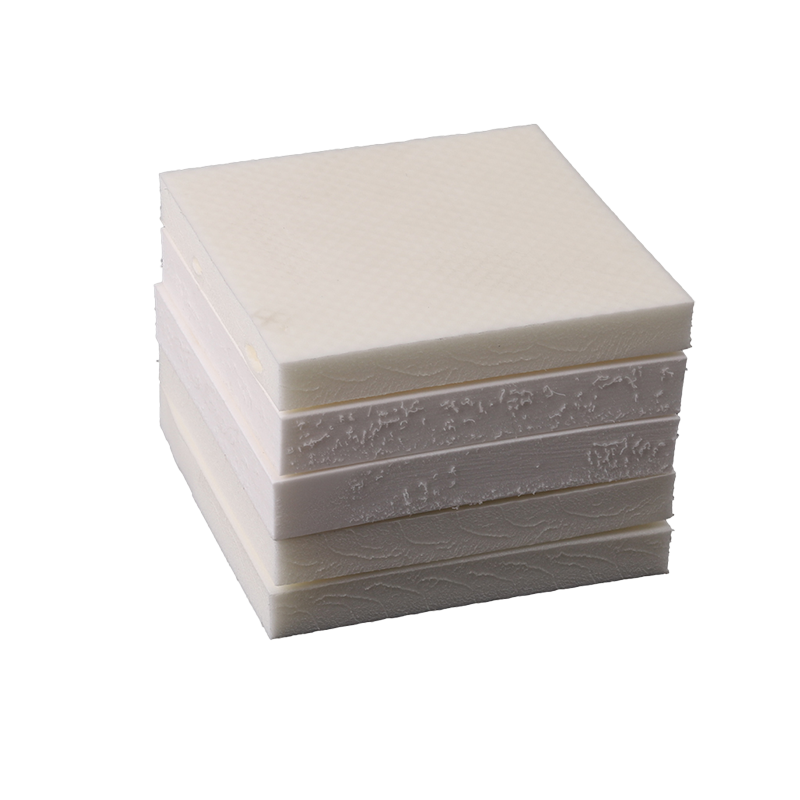
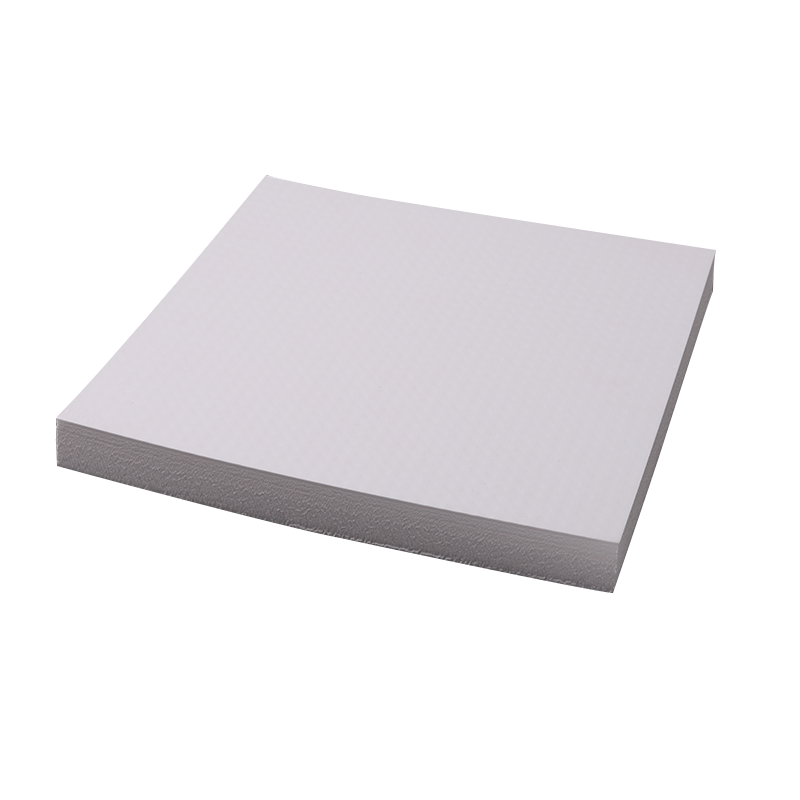
Polyvinylidene fluoride (PVDF Foam Sheet) has become a widely used material across multiple industries, including electronics, construction, and chemical processing, due to its chemical resistance, lightweight properties, and dimensional stability. Despite its advantageous characteristics, manufacturing PVDF Foam Sheet involves complex processes, and defects can arise at various stages. Understanding these defects is critical for ensuring quality, optimizing production, and reducing material waste.
Material Composition and Its Impact on Defects
The base material of PVDF Foam Sheet is a high-performance thermoplastic polymer that exhibits excellent resistance to heat, chemicals, and UV degradation. However, the quality of the raw PVDF resin and any additives used, such as foaming agents or stabilizers, has a significant impact on the final product. Impurities, inconsistent particle sizes, or uneven dispersion of additives can lead to defects such as voids, inconsistent density, or surface irregularities.
Table 1 provides an overview of key material-related factors affecting PVDF Foam Sheet quality:
| Factor | Potential Defect | Impact on Final Product |
|---|---|---|
| Resin Purity | Contamination or dark spots | Aesthetic issues, reduced chemical resistance |
| Foaming Agent Quality | Uneven cell structure | Reduced mechanical strength, inconsistent insulation properties |
| Additive Dispersion | Localized stiffness or softness | Warping, bending, or uneven compressibility |
| Moisture Content | Hydrolytic degradation during processing | Surface blistering, microvoid formation |
Proper quality control of raw materials is therefore a foundational step in minimizing defects. Suppliers often monitor resin particle size, moisture content, and additive homogeneity before production begins.
Process-Related Defects
Foaming and Expansion Irregularities
One of the most common defects in PVDF Foam Sheet is irregular foaming or expansion. During production, PVDF Foam Sheet is typically formed through extrusion or calendaring processes combined with a controlled foaming step. Deviations in temperature, pressure, or foaming agent activation can result in uneven density, collapsed cells, or large voids.
Collapsed cells reduce the thermal insulation and mechanical performance of the foam, while over-expanded areas can lead to surface irregularities. Inconsistent expansion may also make cutting, trimming, or further processing more difficult, affecting dimensional accuracy.
Surface Imperfections
Surface quality is a critical factor for applications that require smooth and uniform PVDF Foam Sheet, such as in architectural cladding or electronics insulation layers. Common surface defects include:
- Pinholes caused by gas bubbles trapped during the foaming process.
- Wrinkles resulting from uneven cooling or insufficient tension during rolling.
- Blisters due to trapped moisture or volatile components.
Careful control of cooling rates, roller speeds, and foil tension can reduce the occurrence of these defects. Additionally, vacuum-assisted processes may help remove trapped gases and minimize surface blemishes.
Dimensional Inconsistencies
Dimensional precision is particularly important for PVDF Foam Sheet used in industrial or technical applications. Thickness variations, warping, and edge deviations are common defects arising from misalignment of rollers, improper temperature profiles, or uneven material feed.
Table 2 summarizes typical dimensional defects and their primary causes:
| Defect | Likely Cause | Effect on Application |
|---|---|---|
| Thickness Variation | Uneven material feed or roller pressure | Inconsistent insulation, assembly difficulties |
| Warping | Differential cooling or internal stresses | Poor fit in laminated structures |
| Edge Deviations | Improper cutting alignment | Misalignment in multi-layer assemblies |
Quality inspection tools, such as laser micrometers and edge sensors, are essential for detecting and correcting these issues in real-time.
Internal Structural Defects
Defects inside the PVDF Foam Sheet, which may not be visible on the surface, can significantly compromise performance. These include:
- Macrovoids: Large internal air pockets that reduce mechanical strength.
- Microcracks: Small fissures caused by thermal stress or uneven expansion.
- Cell Non-uniformity: Inconsistent cell sizes impacting density and elasticity.
Advanced inspection methods, such as X-ray imaging or ultrasonic testing, can identify internal defects before the sheets are shipped or integrated into end products.
Environmental and Handling Factors
Environmental conditions and handling practices during production, storage, and transport can exacerbate PVDF Foam Sheet defects. For example:
- Humidity: Excess moisture can lead to hydrolysis during heating, resulting in blistering.
- Temperature fluctuations: Repeated exposure to high and low temperatures may introduce internal stresses, causing warping.
- Mechanical impact: Improper stacking or transport can dent or compress sheets, especially in thicker foam variants.
Maintaining controlled environments and following proper storage guidelines are essential for preserving sheet integrity.
Detection and Quality Assurance Methods
Effective quality control is vital in reducing defects in PVDF Foam Sheet production. Several standard techniques are employed:
- Visual Inspection: For surface blemishes, pinholes, or wrinkles.
- Dimensional Measurement: Using laser micrometers or calipers for thickness and edge uniformity.
- Mechanical Testing: Evaluating compressive strength, flexibility, and recovery properties.
- Non-Destructive Testing: Ultrasonic or X-ray imaging to detect internal voids or cracks.
A well-established inspection protocol not only identifies defective sheets but also provides feedback for process adjustments.
Mitigation Strategies
Minimizing defects in PVDF Foam Sheet production requires a multi-faceted approach:
- Material Control: Ensuring consistent resin quality, proper foaming agent selection, and homogeneous additive dispersion.
- Process Optimization: Maintaining precise temperature and pressure profiles, controlling cooling rates, and ensuring uniform foaming.
- Equipment Maintenance: Regular calibration of extrusion machines, rollers, and cutting tools.
- Environmental Management: Controlling humidity and temperature in production and storage areas.
- Operator Training: Skilled personnel can identify early warning signs and adjust parameters to prevent defect formation.
By integrating these strategies, manufacturers can consistently produce high-quality PVDF Foam Sheet with minimal defects, enhancing both performance and reliability.
Applications Impacted by Defects
The implications of defects vary by application. For instance:
- Electronics insulation requires precise thickness and smooth surfaces. Pinholes or wrinkles could compromise dielectric performance.
- Architectural panels demand aesthetic uniformity; surface blisters or color inconsistencies are unacceptable.
- Chemical processing gaskets depend on structural integrity; internal voids can lead to failure under pressure.
Thus, understanding the specific requirements of the end-use application is crucial for prioritizing defect mitigation measures.
Table of Defect Severity and Recommended Actions
| Defect | Severity Level | Recommended Action |
|---|---|---|
| Pinholes | Medium | Vacuum-assisted foaming, surface inspection |
| Wrinkles | Medium | Adjust cooling rate, improve tension control |
| Blisters | High | Reduce moisture content, optimize heating profile |
| Thickness variation | High | Calibrate rollers, monitor material feed |
| Macrovoids | High | Adjust foaming agent, improve extrusion uniformity |
| Microcracks | Medium | Optimize temperature ramp, reduce internal stress |
| Edge deviations | Low | Refine cutting alignment, improve handling |
This table provides a practical reference for production teams to assess and address defects based on their severity and potential impact.
Future Considerations
Continuous improvement in PVDF Foam Sheet production includes exploring advanced foaming techniques, better raw material standardization, and more sophisticated inspection methods. Innovations such as automated thickness monitoring, real-time imaging, and environmentally controlled production lines can further reduce defects and improve overall product consistency.
Conclusion
Defects in PVDF Foam Sheet production can significantly affect performance, aesthetics, and application reliability. Common issues include surface imperfections, dimensional inconsistencies, internal structural defects, and process-induced foaming irregularities. Effective quality control, material selection, process optimization, and operator training are key to minimizing these defects. By implementing comprehensive detection and mitigation strategies, manufacturers can ensure consistent, high-quality PVDF Foam Sheet suitable for a wide range of industrial applications.
Frequently Asked Questions (FAQ)
Q1: How can I identify internal defects in PVDF Foam Sheet without cutting it?
A1: Non-destructive testing methods such as ultrasonic imaging and X-ray inspection are effective for detecting internal voids or cracks in PVDF Foam Sheet.
Q2: What environmental conditions should be maintained during PVDF Foam Sheet storage?
A2: Sheets should be stored in a temperature- and humidity-controlled environment to prevent warping, blistering, or moisture-related defects.
Q3: How can foaming irregularities in PVDF Foam Sheet be minimized?
A3: Controlling temperature, pressure, and foaming agent activation during production ensures uniform cell structure and density.
Q4: Are surface defects in PVDF Foam Sheet repairable?
A4: Minor surface irregularities may be corrected through trimming or sanding, but structural or internal defects usually require replacement of the affected sheet.
Q5: What quality inspection tools are recommended for PVDF Foam Sheet?
A5: Laser micrometers, calipers, ultrasonic testing devices, and X-ray imaging systems are commonly used to ensure surface and internal quality.
References
- Smith, J., & Roberts, L. (2022). Foam Materials and Industrial Applications. Industrial Polymer Review.
- Zhao, Q. (2021). Advanced PVDF Processing Techniques for High-Performance Foam. Materials Engineering Journal.
- Lee, H., & Kim, S. (2020). Non-Destructive Evaluation of Thermoplastic Foam Sheets. Journal of Polymer Testing.
 ++86-0512-66079229