
 English
 Español

Home / News / What are the difficulties in making a mat using punching needle, latch hook crochet, or other methods?
The Core Difficulty: Handmade Mats Are Harder Than They Look
Making a mat by hand—whether using a punching needle, latch hook, crochet, or weaving—is far more time-consuming, technically demanding, and structurally limited than most beginners expect. The core challenges include achieving even tension, selecting appropriate materials, ensuring durability under repeated use, and meeting functional requirements like cushioning or grip. For fitness or high-use environments, these limitations become especially critical.
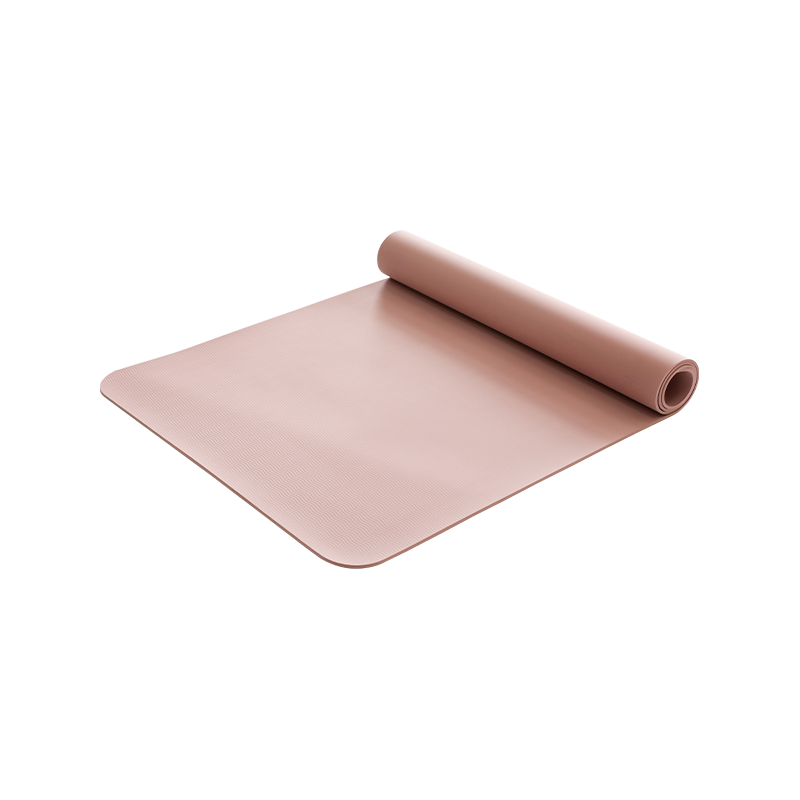
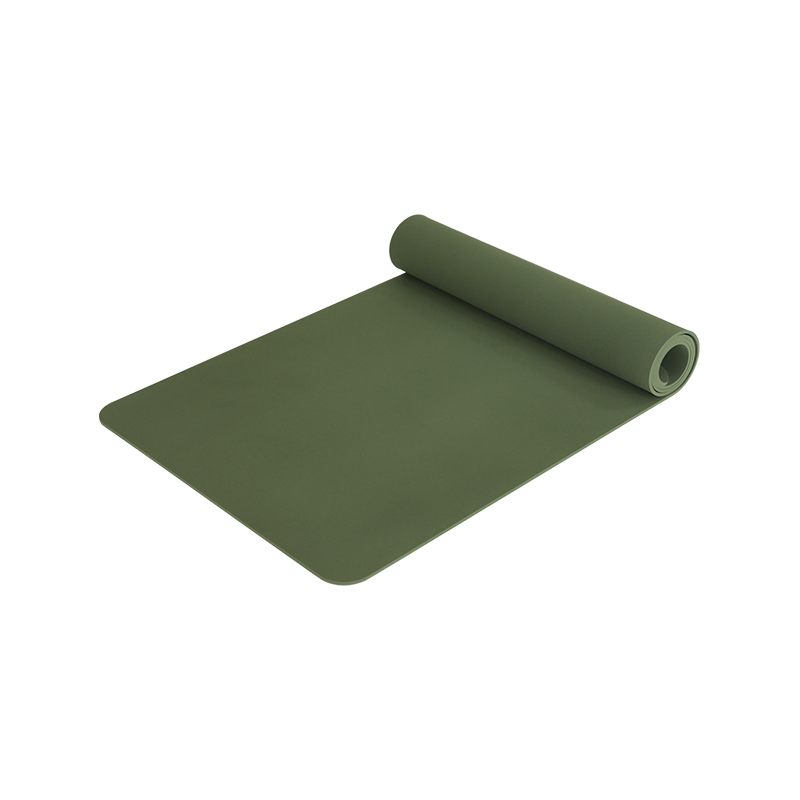
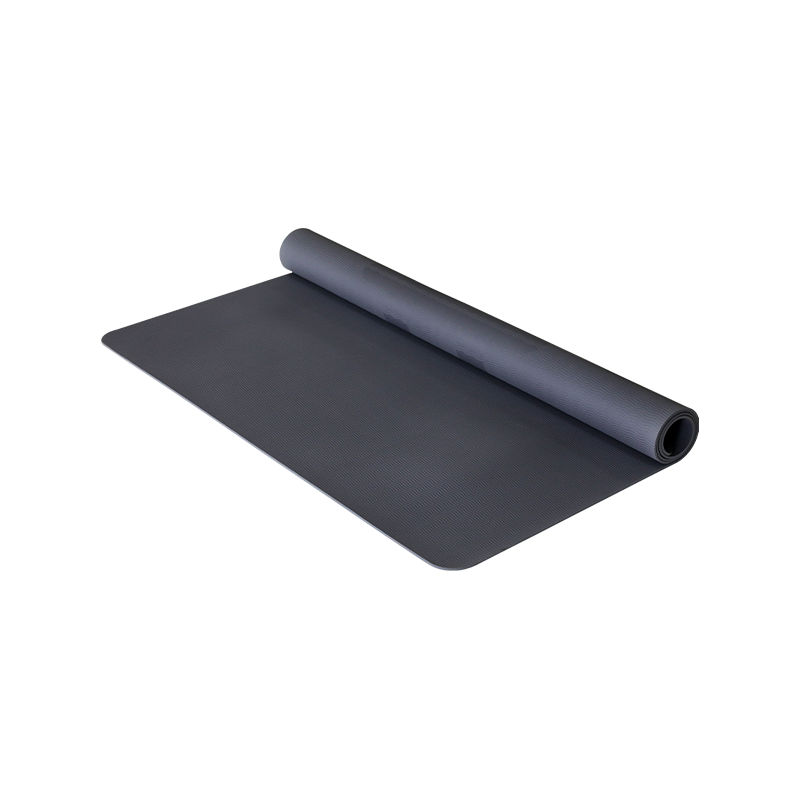
Understanding these difficulties helps explain why professionally manufactured options—such as the MTPU Fitness Mat—exist to fill the gap that handcrafted methods simply cannot bridge for performance-grade applications.
Punch Needle Mat Making: Precision and Consistency Challenges
What Is the Punch Needle Method?
Punch needle involves repeatedly pushing a hollow needle threaded with yarn or fabric strips through a tightly woven base cloth (typically monk's cloth or linen) to create looped pile on the back side. The result is a textured, rug-like surface.
Key Difficulties
- Tension inconsistency: Even experienced crafters struggle to maintain uniform loop height. Uneven tension causes the surface to look patchy and the mat to curl or buckle at the edges.
- Base fabric stretching: The monk's cloth or linen backing stretches during punching, especially on larger projects (anything above 30×30 cm becomes noticeably harder to manage). This distorts the final shape.
- Loop security: Without a latex or adhesive backing applied afterward, loops pull out easily under friction. A mat used on the floor loses loops within days of regular foot traffic.
- Time investment: A 50×80 cm punch needle mat can take 40–80 hours of work, depending on the design complexity and yarn weight.
- Material cost: Quality monk's cloth and wool yarn for a medium mat can cost $30–$80 in materials alone, with no guarantee of a usable result for beginners.
Latch Hook Mat Making: Repetition, Durability, and Scale Problems
What Is Latch Hook?
Latch hook uses a specialized hook tool to pull pre-cut yarn lengths through a stiff canvas mesh, knotting each piece individually. It is often sold in kit form with printed canvas and pre-cut yarn.
Key Difficulties
- Extremely repetitive labor: Each knot is tied individually. A standard 50×75 cm mat contains roughly 3,000–5,000 individual knots, requiring 15–30 hours of focused work.
- Canvas rigidity: The stiff plastic canvas used as a base does not flex well, making the finished mat uncomfortable underfoot and prone to cracking if folded or rolled.
- Poor washability: Latch hook mats generally cannot be machine washed without losing knots or warping the canvas backing, limiting their hygiene in high-use settings.
- Thickness limitations: The pile height is fixed by the pre-cut yarn length (usually 3–4 cm), so there is no ability to adjust cushioning or density for specific uses like yoga or fitness.
- Edge fraying: Without proper finishing (binding tape or folded edges), the canvas edges unravel over time, particularly where the mat experiences the most stress.
Crochet Mat Making: Structural Weakness and Sizing Constraints
What Is Crochet Mat Making?
Crocheted mats are built stitch by stitch using a hooked needle and yarn or cord. Common styles include granny squares, spiral rounds, and rectangular flat stitch patterns. Chunky cotton or jute cord is typically used for floor mats.
Key Difficulties
- Gauge variation: Every crafter has a different natural tension, meaning the same pattern and yarn can produce mats of significantly different sizes and densities. A slight gauge difference across a 60 cm mat can result in a 5–10 cm size discrepancy.
- Stretch and deformation: Most crochet stitches have inherent stretch. Under foot traffic or furniture weight, the mat elongates or spreads, losing its original shape within weeks.
- Slip hazard: Crocheted mats on hard floors are notoriously slippery unless a non-slip backing is added separately—a step many makers overlook.
- Material wear: Cotton or jute mats pill, fray, or absorb moisture heavily. Jute in particular weakens when repeatedly wet, making it unsuitable for fitness environments.
- Scalability: Larger mats (above 90 cm in any dimension) become unwieldy to crochet in the round and require seaming multiple panels, which creates visible joins and weak points.
Other Handmade Methods: Weaving, Braiding, and Tufting
Weaving
Frame or loom weaving produces dense, flat mats with good stability. However, it requires dedicated equipment (a loom), and sizing is constrained by the loom width—typically 40–60 cm for home looms. Larger mats must be woven in strips and seamed, which are structurally vulnerable under regular load.
Braiding
Braided mats (usually made from fabric strips) are durable and washable, but achieving consistent braid tension across a large mat is difficult. The spiral coiling process also requires secure stitching at every pass, and a standard oval braided mat (60×90 cm) can take 20–35 hours to complete.
Hand Tufting
Hand tufting guns speed up the punch needle process but cost $80–$200 for a basic model, require a frame setup, and still need latex backing to secure fibers. The learning curve for even results is steep, and the equipment is not practical for occasional home use.
Comparison of Handmade Mat Methods
| Method | Avg. Time (50×80 cm) | Durability | Non-Slip | Suitable for Fitness Use |
| Punch Needle | 40–80 hrs | Low–Medium | No (needs backing) | No |
| Latch Hook | 15–30 hrs | Medium | No | No |
| Crochet | 10–25 hrs | Low–Medium | No (needs backing) | No |
| Braiding | 20–35 hrs | Medium | Partial | No |
| Hand Tufting | 20–50 hrs | Medium–High | No (needs backing) | No |
Why Handmade Mats Fall Short for Fitness and Performance Use
All of the handmade methods above share fundamental limitations when evaluated against the demands of fitness or athletic environments:
- Cushioning control: Handmade mats cannot achieve consistent, engineered foam or rubber density. There is no way to target specific firmness (e.g., 30–50 Shore A hardness) by hand.
- Moisture resistance: Yarn-based mats absorb sweat and cannot be sanitized efficiently, creating hygiene concerns for repeated fitness use.
- Surface grip: Without a purpose-engineered bottom layer, handmade mats slide on smooth floors—a safety risk during dynamic movements.
- Dimensional stability: Even the best handmade mat will shift, stretch, or compress unevenly after prolonged use, disrupting posture alignment and exercise form.
- Size consistency: Producing two identical handmade mats for a gym or studio setting is practically impossible without industrial equipment.
These gaps are precisely what purpose-built fitness mats with engineered materials are designed to solve—offering verified thickness, tested grip coefficients, and consistent cushioning across the entire surface.
Frequently Asked Questions
Q1: Can a punch needle mat be used as a yoga or exercise mat?
Not effectively. Punch needle mats lack structural cushioning, have poor surface grip without added backing, and absorb moisture. They are decorative floor pieces, not functional fitness surfaces.
Q2: How long does a latch hook mat typically last under daily use?
Under regular foot traffic, a latch hook mat typically shows visible wear—loose knots, thinning pile—within 3–6 months. Canvas edges can begin fraying even sooner without proper finishing.
Q3: Is crochet or punch needle easier for a first-time mat maker?
Crochet is generally more accessible for beginners—it requires only a hook and yarn with no frame or specialized tool. Punch needle has a steeper setup requirement and tension learning curve.
Q4: What material backing can I add to a handmade mat to improve grip?
Latex rug backing spray or iron-on non-slip mesh fabric are the most common options. Both add grip but do not fix structural issues like stretch, compression, or moisture absorption.
Q5: Why is MTPU used as a material in professional fitness mats?
MTPU (Modified Thermoplastic Polyurethane) offers a combination of resilience, abrasion resistance, and controlled firmness that no yarn-based handmade method can replicate. It maintains shape under repeated load and resists moisture, making it well-suited for demanding fitness environments.
Q6: How much does it cost to make a large handmade mat versus buying a professional one?
Material costs for a 60×90 cm handmade mat typically run $40–$120, not counting tools or time. When time is factored in at even a modest hourly rate, the total cost frequently exceeds that of a professionally manufactured fitness mat of comparable size.
 ++86-0512-66079229